Deep in the southern sector of Queen Elizabeth National Park, near the Ishasha plains, there is a wildlife spectacle that seems almost impossible the first time you see it.
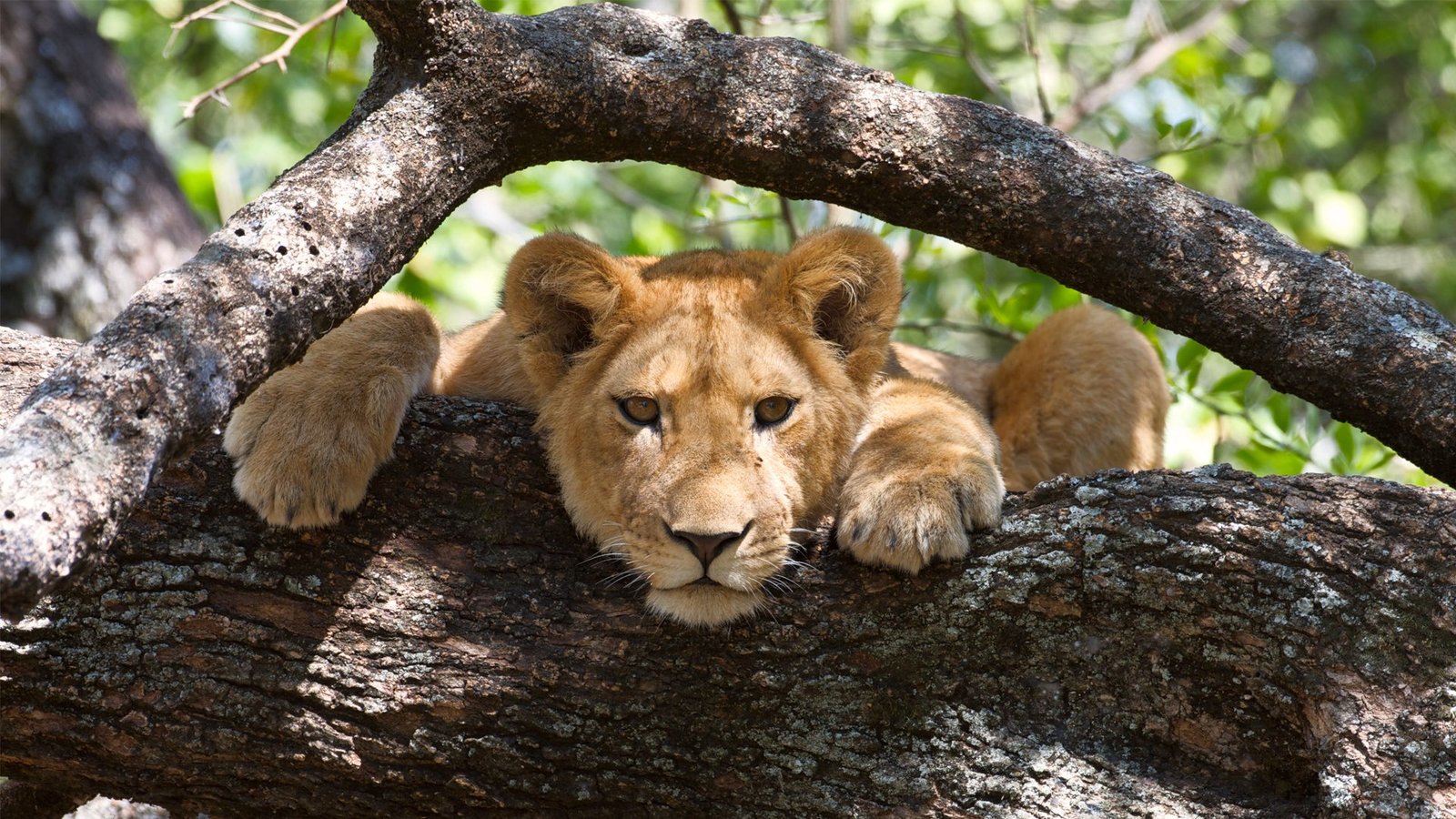
A lion is resting in the branches of a tree.
Not underneath it.
In it.
The famous Ishasha tree-climbing lions are one of Uganda’s most unusual safari attractions. But why would an animal that spends most of its life on the ground choose to climb into a tree?
Why Do the Lions Climb Trees?
Scientists and safari guides have proposed several explanations, and the most likely answer is that there isn’t just one reason.
1. To Escape the Heat
This is one of the most commonly suggested explanations.
Ishasha can become extremely hot during the day. A lion lying on the ground has to deal with hot soil, insects and direct sunlight.
Up in a tree, however, the lion may find:
- A cooler breeze
- Shade
- A more comfortable resting place
- Relief from the heat rising from the ground
The branches can essentially become a natural lounge chair.
And lions are experts at conserving energy.
If there is a comfortable place to sleep, they are probably going to use it.
2. To Escape Annoying Insects
Another important theory involves biting insects.
The ground around the savannah can be full of flies and other insects, particularly during certain periods.
Climbing into a tree may provide some relief.
Imagine spending your afternoon trying to sleep while insects constantly crawl and bite you.
Then imagine discovering that there is a branch several metres above the ground where the insects are less bothersome.
For a lion, that might be a very good reason to climb.
3. The View From Above
There is another advantage to being in a tree:
You can see farther.
From an elevated position, a lion can potentially get a better view of its surroundings.
The lion isn’t necessarily sitting there like a lookout watching for its next meal. Lions are opportunistic hunters and spend a huge amount of time resting.
But an elevated position can provide a different perspective of the surrounding landscape.
And for safari visitors, that perspective is spectacular.
4. It May Simply Be Comfortable
Sometimes the best explanation is surprisingly simple:
The lion likes the tree.
Not every unusual animal behaviour needs to have a complicated explanation.
Some lions appear to develop a preference for particular trees or areas where they can comfortably rest.
The wide, sturdy branches of certain trees provide a surprisingly good place for a large cat to stretch out.
And once a lion discovers a comfortable spot, it may return to it repeatedly.
Why Don’t All Lions Climb Trees?
This is what makes the Ishasha lions particularly fascinating.
Lions are not naturally specialized tree climbers in the way leopards are.
Their bodies are designed primarily for life on the ground. They are large, heavy cats, and climbing isn’t an essential part of their normal behaviour.
That’s why you shouldn’t expect to see lions in trees everywhere you go on safari.
Tree climbing appears to be an unusual behaviour associated with certain lion populations and environmental conditions.
In Ishasha, however, it has become one of the area’s signature wildlife experiences.
Ishasha vs. Leopards: Who Is Better at Climbing?
If you’ve ever seen a leopard climbing a tree, you’ll immediately notice the difference.
Leopards are excellent climbers.
They have powerful limbs, strong claws and bodies that are much more naturally suited to climbing.
Leopards regularly use trees to:
- Rest
- Store kills
- Avoid competition
- Escape danger
- Survey their surroundings
Lions don’t typically use trees in the same way.
So when you see an enormous lion stretched across a branch in Ishasha, you’re witnessing something much less common.
Where Can You See the Tree-Climbing Lions?
The famous tree-climbing lions are associated with the Ishasha sector of Queen Elizabeth National Park in southwestern Uganda.
Ishasha is located in the southern part of the park, close to the border with the Democratic Republic of Congo.
The landscape is beautiful, with open grasslands, woodland and large fig trees that provide the perfect structures for the lions to rest in.
But remember:
Wildlife is unpredictable.
Seeing a tree-climbing lion is never guaranteed.
That’s part of what makes the experience special.
Your safari guide may know areas where lions are frequently seen, but ultimately the animals decide where they spend their day.
What Is It Like to See One?
Picture this.
You’re driving slowly through Ishasha.
The morning sun is beginning to warm the savannah.
Your guide suddenly stops.
Everyone looks around.
You don’t see anything.
Then the guide points upward.
At first, you see only branches.
Then you notice a paw.
Then a tail.
And finally you realize you’re looking at a full-grown lion lying several metres above the ground.
The entire safari vehicle goes quiet.
That’s the kind of wildlife encounter people remember for decades.
The Best Time to Look for Them
There is no guaranteed hour when the lions will climb.
However, lions are generally most active during cooler periods and spend much of the hotter part of the day resting.
That means a safari guide will often search for them during morning and late-afternoon game drives, while also keeping an eye on the trees throughout the day.
The key is not simply driving around looking at the ground.
Look up.
That’s one of the most important lessons when visiting Ishasha.
Why Ishasha Should Be on Your Uganda Safari
Queen Elizabeth National Park already offers an incredible combination of wildlife, landscapes and experiences.
But Ishasha adds something different.
You could spend the morning looking for elephants and buffaloes across the plains, then discover lions relaxing in the branches of a fig tree.
And if you’re combining your safari with Bwindi Impenetrable National Park, Ishasha can fit naturally into a western Uganda itinerary before or after gorilla trekking.
That means one journey can combine:
Savannah → tree-climbing lions → mountain gorillas → rainforest → crater lakes → local culture
That’s one of the reasons western Uganda is such an extraordinary safari region.
The tree-climbing lions of Ishasha remind us that wildlife doesn’t always behave according to the textbook.
Lions are famous as powerful ground predators.
Yet in Ishasha, they sometimes climb into the trees, stretch across branches and spend hours sleeping above the savannah.
Perhaps they’re escaping the heat.
Perhaps they’re avoiding insects.
Perhaps they simply enjoy the view.
The truth may be a combination of several factors.
But one thing is certain:
Seeing a lion in a tree is an experience you won’t soon forget.
And if you’re planning a Uganda safari, don’t just look across the plains.
Look up.