Gorilla trekking is often described as one of Africa’s most unforgettable wildlife experiences.
And it is.
But before you picture yourself casually walking through a beautiful rainforest, spotting a gorilla family and taking a few photographs, there are some things you should know.
Gorilla trekking is not a zoo visit.
It is a real wilderness experience. The gorillas move freely through dense forests, the terrain can be challenging, weather can change quickly, and sometimes finding the family takes longer than expected.
But those unexpected moments are also what make the experience so extraordinary.
Here are 10 things nobody tells you about gorilla trekking—until you experience them yourself.

1. Gorilla Trekking Is More Physical Than You Expect
Let’s start with the biggest surprise.
You are going hiking.
Gorilla trekking takes place in mountainous rainforest, and the terrain can involve steep slopes, muddy paths, thick vegetation and uneven ground.
Some treks may be relatively short.
Others can take several hours.
The exact experience depends largely on where the gorilla family is located that day.
You might walk for 45 minutes.
Or you might spend several hours searching.
That’s why comfortable hiking shoes, appropriate clothing and reasonable preparation matter.

And here’s something many first-time visitors don’t realize:
You don’t need to be an elite hiker.
But you should be prepared for a genuine forest hike.
If you have mobility limitations or concerns about the physical demands, tell your safari operator before the trek so the itinerary and available assistance can be discussed.
2. You Don’t Know Exactly Where the Gorillas Will Be
This is one of the most fascinating parts.
Mountain gorillas aren’t waiting in a particular location for tourists.
They move.
Every day.
Your trackers and guides use information from earlier observations to locate the gorilla family, but the animals determine where they spend their time.
That means your trek can feel like a real search.
You walk through the forest.
You stop.
Your guide listens.
You continue.
Then suddenly someone says:
“They’re close.”
The entire atmosphere changes.

3. The Forest Is Part of the Experience
Many people focus so heavily on seeing the gorillas that they forget something important:
Bwindi itself is spectacular.
The forest is ancient, dense and alive with sounds.
You may hear birds calling from the canopy.
Leaves moving above you.
Insects buzzing.
Branches breaking somewhere in the vegetation.
You may see butterflies, monkeys and other forest wildlife along the way.
Even before you meet the gorillas, you’re already experiencing an extraordinary ecosystem.

4. You May Get Very, Very Close to a Gorilla
This is the moment that people struggle to describe.
You’re walking through the vegetation.
Then you see movement.
A dark shape.
You take another step.
And suddenly there’s a gorilla sitting only a few metres away.
It may be eating.
It may be resting.
A youngster may be playing nearby.
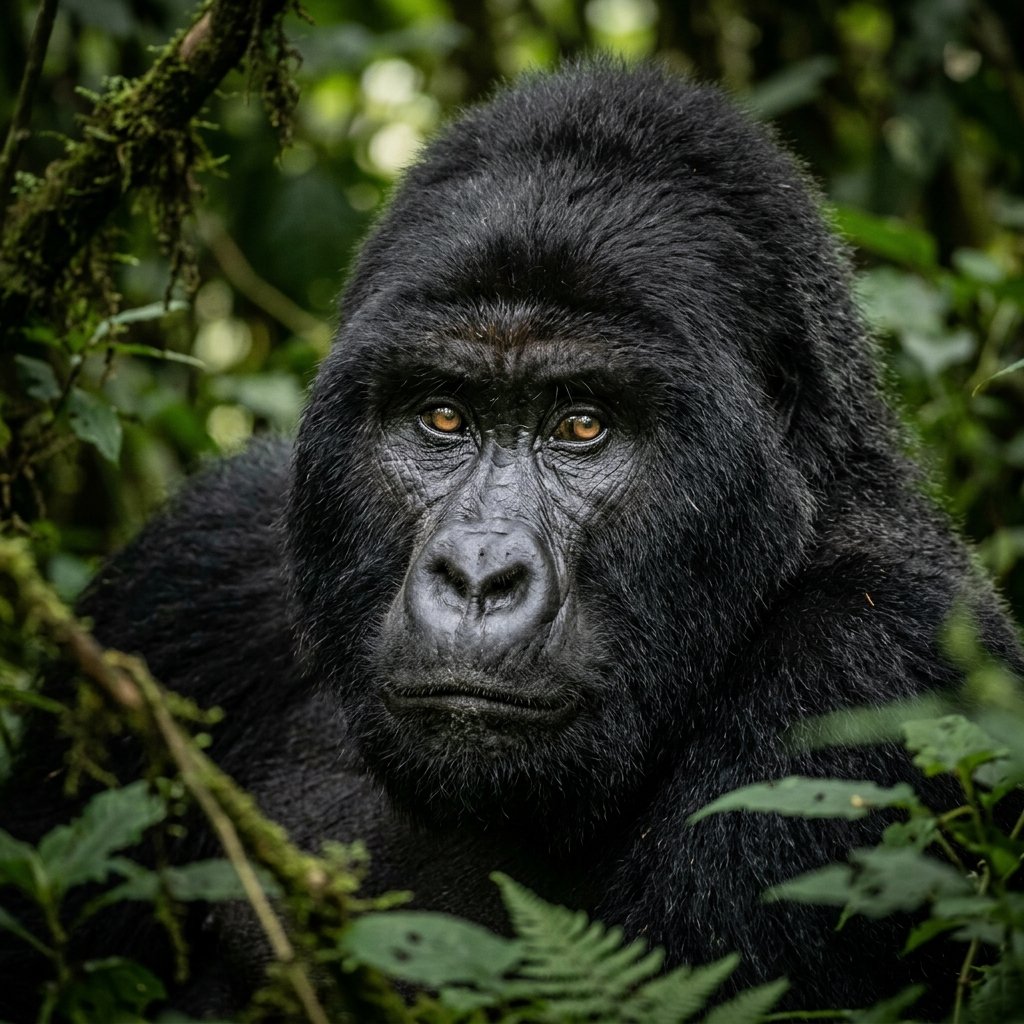
A silverback may be sitting quietly watching the group.
And you realize:
This isn’t a documentary.
You’re standing in the same forest.

There are strict rules governing how visitors interact with gorillas, including maintaining the required distance and following the instructions of the guides and trackers.
The goal is to protect both the gorillas and the visitors.
5. The Gorillas Don’t Always Care About You
And this can be hilarious.
You arrive expecting a dramatic wildlife encounter.
The silverback looks at you.
You look at the silverback.
And then…
He goes back to eating.
Or sleeping.
Or scratching himself.
Or completely ignoring you.
Gorillas aren’t performing for visitors.
They are simply going about their day.
And that’s exactly what makes the experience so authentic.

6. Baby Gorillas Can Steal the Entire Show
You may think you’re going to see the famous silverback.
Then a baby gorilla appears.
Suddenly nobody is looking at the silverback anymore.
Young gorillas can be incredibly playful and curious.
They may climb.
Roll around.
Play with vegetation.
Interact with other members of the group.
Watching a gorilla family interact gives you a completely different understanding of these animals.
You’re not simply looking at individual animals.
You’re observing a social family group.
7. Rain Doesn’t Care About Your Safari Plans
Welcome to the rainforest.
The weather can change quickly.
You can start your trek under blue skies and find yourself walking through rain later.
And sometimes the rain makes everything even more dramatic.
The forest becomes greener.
Leaves glisten.
Mist hangs between the trees.
The ground becomes muddy.
Your clothes get wet.
And you realize you are genuinely in a rainforest.

That’s why a waterproof jacket or poncho is one of the smartest things you can pack.
And don’t forget protection for your camera and phone.
8. You Might Get Emotional
Nobody really prepares you for this.
You have probably seen gorillas in documentaries.
You’ve seen photographs.
You’ve watched videos.
But seeing one in person is completely different.
You begin noticing details.
The eyes.
The hands.
The expressions.
The way a mother interacts with her baby.
The way a silverback watches the group.
The way they move through the vegetation.
And suddenly you’re standing quietly in the forest thinking:
“I’m actually here.”

For many travelers, this becomes one of the most meaningful moments of their entire African journey.
9. Your Camera May Not Capture What Your Eyes See
This is a big one for photographers.
The forest can be dark.
Gorillas may be partially hidden by vegetation.
Branches can block your view.
The animals can move unexpectedly.
And the moment you finally get a clear view may last only seconds.
That’s why gorilla trekking isn’t about taking hundreds of perfect photographs.
Sometimes you have to put the camera down.
Look at the gorilla.
Take in the moment.
Listen.
Because no photograph can completely reproduce what it feels like to stand in a rainforest with a mountain gorilla a few metres away.

10. The Trek Doesn’t End When You Find the Gorillas
This surprises people.
Finding the gorillas is only part of the adventure.
After your viewing experience, you still have to walk back through the forest.
And after several hours of hiking, those hills can suddenly feel much steeper.
But the walk back can also be beautiful.
You have time to process what just happened.
Maybe your clothes are muddy.
Your shoes are wet.
Your legs are tired.
Your camera is full of photographs.
And you’re smiling.
Because you just spent time with one of the world’s most remarkable animals in its natural habitat.
What Should You Bring Gorilla Trekking?
Keep your packing practical.
Essential items
- Sturdy hiking boots
- Long trousers
- Long-sleeved shirt
- Waterproof jacket or poncho
- Gardening-style gloves
- Hat
- Insect repellent
- Sunscreen
- Water
- Snacks
- Small backpack
- Camera
- Extra batteries/power bank
- Waterproof bag for electronics
A walking stick can also be helpful, particularly on steep or muddy sections.
And if you don’t want to carry your backpack or need physical assistance during the trek, porter services may be available. Hiring a porter can also provide direct income to local communities.
What Is the Gorilla Trekking Experience Actually Like?
A typical day may look something like this:
Early morning
Wake up at your lodge.
Have breakfast.
Meet your guide.
Travel to the briefing point.
The briefing
You’ll receive instructions about gorilla etiquette, safety and what to expect.
The trek
You enter the forest with your guide and trackers.
The search begins.
The moment
The trackers locate the gorilla family.
You approach carefully.
Then you spend your designated viewing time observing the gorillas.
The return
You leave the gorillas and begin the trek back.
By the time you return to your lodge, you may be tired, muddy, hungry—and incredibly happy.

6
The Most Important Thing Nobody Tells You
Perhaps the biggest lesson is this:
Don’t go into gorilla trekking expecting the experience you saw on Instagram.
Your trek will be your own.
Maybe the gorillas will be easy to find.
Maybe you’ll hike for hours.
Maybe you’ll get incredible photographs.
Maybe the forest will be covered in mist.
Maybe a baby gorilla will walk right past you.
Maybe the silverback will ignore you completely.
You simply don’t know.
And that’s the beauty of wildlife travel.
Why Gorilla Trekking Is Worth the Journey
Gorilla trekking isn’t just another item to add to your African safari itinerary.
It gives you an opportunity to enter the world of an animal that shares so much of its social behaviour with us while remaining completely wild.
You’re not watching through a glass enclosure.
You’re not watching from behind a zoo fence.
You’re walking through their forest.
And for a brief period, you’re allowed to quietly observe their lives.
That is a privilege.

Final Thoughts
Gorilla trekking can be challenging.
It can be muddy.
It can be unpredictable.
You might sweat.
You might get rained on.
You might spend hours searching.
But then you finally see them.
A mother holding her baby.
A youngster playing in the vegetation.
A silverback sitting quietly nearby.
And suddenly none of the mud, rain or hiking seems to matter.
Because you’re standing in the forest with gorillas.
And that is an experience that stays with you long after you leave Uganda.
Want expert help planning your Uganda gorilla trekking adventure? Book a free 20-minute consultation with Emmanuel via our contact us page or download our free Uganda Safari Planning Guide.