Kenya is where the word “safari” comes from. It is Swahili, and it simply means “journey”. If you have one image in your head of Africa, flat golden grass, an acacia tree, a lion in the shade of it, that image is Kenya, and it is the easiest place in East Africa to see it for real.
Why Kenya is the right first safari
Kenya has been receiving travellers for a century, and it shows in the best way. The roads work, the lodges are good, the guiding culture is deep, and Nairobi is one of the better-connected airports on the continent. You can be on a game drive within a few hours of landing.
It is also unusually generous with wildlife. The Big Five are all here. So is the Great Migration, for part of the year. So are flamingos in their tens of thousands, and elephants standing in front of Kilimanjaro, and the last two northern white rhinos on earth.
For a first-time visitor from Canada, Kenya asks the least of you and gives back the most.
The Masai Mara
The Mara is the northern continuation of the Serengeti, the same ecosystem, a different country and a different name. It is roughly 1,500 square kilometres of open grassland, and it has the highest density of big cats in Africa.
What makes it exceptional is not just how much is there, but how visible it is. The Mara is open country. In dense woodland a leopard is a rumour; in the Mara you watch a cheetah hunt across open ground from four hundred metres out.
The migration and the river crossings
Roughly 1.5 million wildebeest, plus several hundred thousand zebra and gazelle, move in a continuous loop between the Serengeti and the Mara. They arrive in the Mara around July and stay into October.
The crossings of the Mara River are what people come for, thousands of animals massing on a bank, hesitating, and then pouring into water that contains some of the largest crocodiles in Africa. It is genuinely one of the great wildlife spectacles on the planet.
An honest caveat: crossings cannot be scheduled. The herds cross when they cross. You may wait five hours at a crossing point and watch nothing happen, then see three in a single afternoon. Come for the Mara in migration season and treat a crossing as a bonus rather than a booking.
Conservancies versus the reserve
This is the thing most first-timers do not know, and it changes the trip.
Around the national reserve sit a ring of private conservancies, Naboisho, Olare Motorogi, Mara North and others, leased from Maasai landowners. They cap the number of vehicles, permit off-road driving and night drives, and allow guided walking, none of which is possible inside the reserve itself.
They cost more per night. In exchange, you may be the only vehicle at a leopard sighting rather than one of fourteen. For anyone serious about photography or quiet, the conservancies are worth the difference.
Amboseli
Amboseli is small, dusty and flat, and it produces the single most recognisable photograph in Africa: a herd of elephants crossing open ground with Kilimanjaro rising behind them.
The mountain is in Tanzania. The view of it is in Kenya. It is usually cloud-covered by mid-morning, so the picture you want is at dawn.
Amboseli’s elephants are among the most studied in the world, research here has run continuously since 1972, and the matriarchs are known individually by name and lineage. Guides here can tell you the family history of the animal in front of you.
Lake Nakuru and the Rift Valley
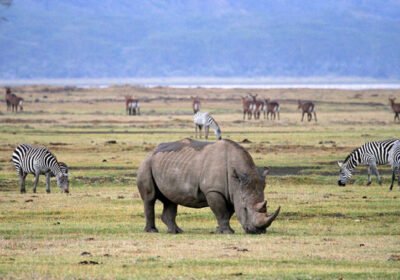
Nakuru is a soda lake in the floor of the Great Rift Valley, and it is a rhino sanctuary, both black and white rhino, fenced and heavily protected, which makes it one of the more reliable places in East Africa to see them.
It is famous for flamingos. Numbers now fluctuate with water levels far more than they once did, so do not travel for flamingos alone, but when the lake is right, the sight of a pink shoreline is unforgettable.
Nearby Lake Naivasha offers something different again: a freshwater lake with hippos, a boat safari, and Crescent Island, where you can walk on foot among giraffe and zebra because there are no large predators.
Ol Pejeta and the northern white rhinos
Ol Pejeta Conservancy in Laikipia is home to the last two northern white rhinos alive anywhere on earth, Najin and Fatu, mother and daughter, both female. The subspecies is functionally extinct; when they die it is gone.
Standing in front of them is a strange, quiet, unforgettable experience. It is also the clearest possible argument for why conservation tourism matters. Ol Pejeta also runs a chimpanzee sanctuary and has excellent big cat viewing.
Tsavo
Tsavo East and West together form one of the largest protected areas in the world, bigger than Jamaica. It is red-earth country, and the elephants here are famously dust-red from bathing in it.
Tsavo is wilder and emptier than the Mara. You will see fewer vehicles and, honestly, sometimes fewer animals, but you will feel like you are somewhere genuinely remote. It also sits conveniently between Nairobi and the coast, which makes it a natural stop if you are ending on a beach.
How long you need
A serious Kenya safari is seven to ten days. Fewer than five and you spend a disproportionate share of it driving.
A well-shaped ten-day route: Nairobi, then Amboseli for Kilimanjaro and elephants, then the Rift Valley lakes, then three or four nights in the Mara, which deserves the most time. Add Ol Pejeta if rhinos matter to you, or finish on the coast at Diani if you want to end horizontal.
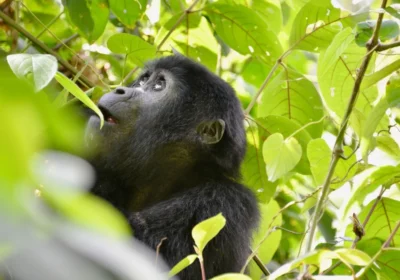
Kenya also combines beautifully with Tanzania, the same ecosystem from both sides, or with Uganda if you want gorillas as well as plains.
When to go
- July to October, migration in the Mara, dry, excellent game viewing. Peak prices, peak crowds.
- January to March, hot, dry, superb big cat viewing, and it lines up with Canadian winter.
- April and May, the long rains. Green, dramatic, quiet, and materially cheaper. Some camps close.
- November to December, short rains, usually brief afternoon showers. Quietly excellent value.
The part that is not about animals
Kenya’s wildlife is the reason people book. It is rarely the thing they talk about most afterwards.
The Maasai are not a photo opportunity. They are a living people who have shared this land with wildlife for centuries, and the conservancy model that protects the Mara works precisely because Maasai landowners are partners in it rather than obstacles to it. Time spent properly with a community, not a staged dance, but a conversation, is the part travellers write to us about a year later.
We arrange these visits through people we know personally, and the money goes where it should.
Planning it from Canada
There is no direct flight from Canada to Nairobi. You will connect, typically through Addis Ababa, Doha, Istanbul, Amsterdam or London, with total travel time around 18 to 22 hours.
Canadians need a visa, applied for online in advance, and a yellow fever certificate is commonly required, particularly if you are arriving from or continuing to another East African country.
Book four to six months ahead for migration season. The best Mara camps are small and they fill early.
Tell us your dates · Browse Kenya itineraries · Book a free consultation