The Serengeti is roughly the size of Nova Scotia. The Ngorongoro Crater is a collapsed volcano with 25,000 large animals living inside it permanently. Tanzania is the scale destination of East Africa, and it is where people go when they want the version of safari that does not feel like it has edges.
The Serengeti
The name comes from the Maasai siringet, “the place where the land runs on forever.” It is an accurate description. Nearly 15,000 square kilometres of open plain, and standing in it is genuinely disorienting because there is nothing to give you scale.
It holds the largest lion population in Africa, and it is the engine of the Great Migration, roughly 1.5 million wildebeest and several hundred thousand zebra moving in a continuous annual loop.
Where the migration is, month by month
This is the single most useful thing to understand when planning Tanzania, because the Serengeti is enormous and being in the wrong sector at the wrong time genuinely matters.
- December to March, southern plains (Ndutu). Calving season. Around 400,000 calves are born in a few weeks in February, and the predator activity is the most concentrated of the entire year. For many guides, this is the best time in the Serengeti, and it is far less crowded than the river crossings.
- April to May, central and moving west. Long rains, green, quiet, cheapest.
- June to July, western corridor and the Grumeti River. The first big crossings, with enormous crocodiles.
- August to October, northern Serengeti and the Mara River. The famous crossings, shared with Kenya’s Masai Mara.
- November, the herds return south. Short rains, good value.
Book your camp in the sector that matches your month. A “Serengeti safari” in February that puts you in the north has missed the point entirely.
The Ngorongoro Crater
Ngorongoro is not a park you drive across. It is a caldera, the collapsed remains of a volcano that was once possibly higher than Kilimanjaro, twenty kilometres across, with walls six hundred metres high.
Inside is a self-contained ecosystem. Around 25,000 large animals live in it year-round, and because the walls are steep, most of them never leave. That density is why you can reasonably expect to see the Big Five in a single day here, including black rhino, which are otherwise very hard to find in East Africa.
The drive down the wall in the early morning, through cloud, into a bowl full of animals, is one of those experiences that does not photograph well and does not need to.
A practical note: the crater floor is busy. Vehicle numbers are capped but the cap is generous, and it is the one place in Tanzania where you will feel like a tourist. Go at dawn, be first down, and you will have an hour before the pressure builds.
Tarangire
Tarangire is where the elephants are, the highest concentration in northern Tanzania, in herds that can number several hundred in the dry season. It is also the baobab park; the landscape is scattered with trees that look drawn by someone who had one described to them.
Most itineraries give Tarangire a single night, which is a mistake. In the dry season, from July to October, when the Tarangire River is the only water for a long way, it can outperform the Serengeti for sheer volume of animals.
Lake Manyara
Small, green, and squeezed between the Rift Valley escarpment and the lake. Manyara is known for tree-climbing lions, genuinely unusual behaviour, and for enormous troops of baboons.
It is a half-day park, usually visited on the way to somewhere else, and it is a pleasant contrast to the open plains: forest, groundwater springs, and a lot of birds.
Kilimanjaro
The highest mountain in Africa at 5,895 metres, and the highest free-standing mountain in the world, it is not part of a range, it simply rises out of flat plain.
The remarkable thing about Kilimanjaro is that it requires no technical climbing. It is a long, steep walk at altitude. That accessibility is also its danger: people underestimate it, ascend too fast, and roughly a third of attempts fail, almost always from altitude sickness rather than fitness.
The single biggest determinant of success is the number of days you take. Five-day routes have poor success rates. Seven- and eight-day routes on the Lemosho or Machame lines give your body time to acclimatise and succeed far more often. Pay for the extra days.
Zanzibar
An hour’s flight from the Serengeti and a completely different world, Indian Ocean, white sand, and Stone Town, a UNESCO site of Omani, Persian, Indian and African architecture layered on top of each other.
The classic Tanzania trip is safari then beach, and it works because after eight days of dawn game drives you will want to lie down. Three or four nights is usually right.
Northern circuit or southern?
Almost everyone goes north, Serengeti, Ngorongoro, Tarangire, Manyara. It is the greatest concentration of wildlife anywhere, and the infrastructure is excellent.
The southern circuit, Ruaha and Nyerere, formerly Selous, is a different proposition. Ruaha is the largest national park in Tanzania and receives a fraction of the visitors. It has enormous lion prides, both greater and lesser kudu, and a genuine sense of remoteness. Nyerere offers boat safaris on the Rufiji River, which the north cannot.
If this is your first African safari, go north. If you have been before and want wilderness over spectacle, ask us about the south.
How long, and what it costs
A proper northern circuit is eight to ten days. Six is possible but rushed. Adding Zanzibar makes it twelve to fourteen.
Tanzania is the most expensive of the East African countries for safari, largely because park fees are high, Serengeti entry runs around USD $70 per person per day, and the Ngorongoro crater service fee is charged on top. Budget CAD $400, $650 per day for good mid-range private travel, more for the small luxury camps.
Getting there from Canada
Fly into Kilimanjaro International (JRO) rather than Dar es Salaam if you are doing the northern circuit, it puts you two hours from Arusha instead of a domestic flight away. Connections are typically via Addis Ababa, Doha, Amsterdam or Istanbul.
Canadians need a visa, available online in advance, and a yellow fever certificate is commonly required, particularly if arriving from Kenya, Uganda or Rwanda.
For calving season in February or the crossings in August, book six months ahead. The camps that sit in the right place at the right time are small and they go early.
Combining Tanzania
Tanzania pairs naturally with Kenya, the Serengeti and the Mara are the same ecosystem viewed from either side, and a combined trip lets you follow the migration across the border.
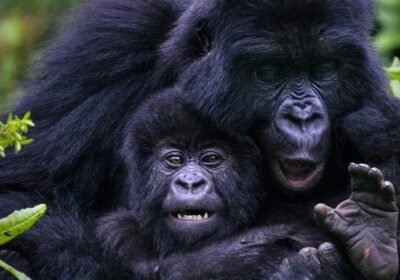
It also pairs well with Uganda or Rwanda if you want gorillas as well as plains, though that is a two-week trip and should not be attempted in ten days.
Tell us your dates and we’ll place you in the right sector · Browse Tanzania itineraries · Book a free consultation