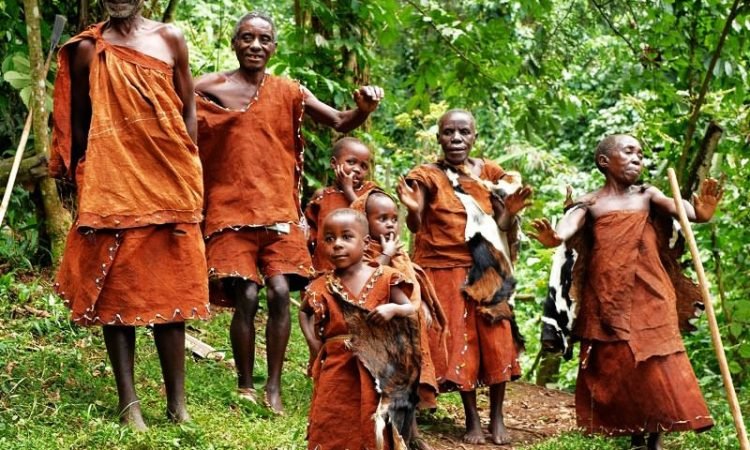
The Batwa people, sometimes referred to as Twa, are among the oldest surviving indigenous communities of Central Africa. Traditionally known as forest dwellers, they lived for centuries as hunter-gatherers in the dense equatorial forests of the Great Lakes region. Today, many Batwa communities live in southwestern Uganda, including Kisoro District near the famous gorilla habitats.
Historically, the Batwa lived in what is now the protected forests of Bwindi Impenetrable National Park and Mgahinga Gorilla National Park. These forests provided everything they needed—food, medicine, shelter, and spiritual sites. Because of their deep understanding of the ecosystem, the Batwa were often referred to as “Keepers of the Forest.”
The Ancient Forest Dwellers
For thousands of years, the Batwa lived a nomadic lifestyle based on hunting small animals and gathering wild fruits, vegetables, honey, and medicinal plants. They built temporary huts from branches and leaves and moved regularly within the forest to follow food sources.
Anthropologists believe that pygmy groups such as the Batwa may have lived in the equatorial forests of Africa for more than 60,000 years, making them one of the region’s earliest known inhabitants.
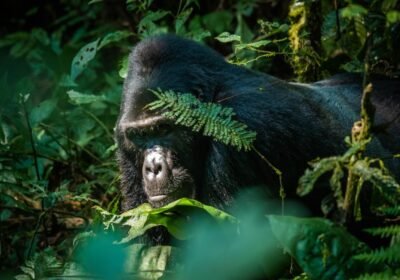
The Batwa lived in harmony with nature and shared the forest ecosystem with wildlife, including the endangered mountain gorillas that today attract visitors from around the world.
Historical Misrepresentation and Marginalization
Historically, the Batwa have faced misunderstanding and discrimination. In early Western writings such as The Anatomy of a Pygmy Compared with that of a Monkey, and Ape and a Man by Edward Tyson, misleading comparisons between humans and primates reinforced harmful stereotypes about pygmy communities.
Another tragic example is the story of Ota Benga, a Congolese Batwa man who was captured and displayed at the Bronx Zoo in the early 1900s after first being exhibited at the St. Louis World’s Fair. His treatment sparked international controversy and highlighted the severe prejudice faced by African forest communities.
These historical misrepresentations contributed to long-standing discrimination and social exclusion that many Batwa communities continue to face today.
Displacement from Their Ancestral Forest
For centuries the forest was the Batwa’s home. However, in 1991 the Ugandan government established national parks to protect endangered wildlife, including mountain gorillas. As a result, Batwa communities were evicted from the forests they had inhabited for generations.
Because the Batwa were traditionally nomadic and had no formal land titles, they were not legally recognized as landowners. Consequently, many families received no compensation or resettlement land after being displaced.
Today many Batwa live in small settlements across southwestern Uganda, including Kisoro, Kabale, Kanungu, Bundibugyo, and Rukungiri districts.
Population and Social Structure
According to national estimates, Uganda’s Batwa population is approximately 6,000–7,000 people.
Traditionally, Batwa communities lived in small family groups within forest territories collectively managed by clans. Even today, Batwa settlements maintain strong community bonds and cultural traditions.
Physically, the Batwa are known for their short stature, with most adults averaging around four feet (about 120 cm) in height. This characteristic is one of the reasons they were historically labeled as “pygmies.”
Despite relocation, Batwa communities still maintain cultural practices such as storytelling, traditional music, dance, and herbal medicine.
Traditional Batwa Economy
The Batwa economy was traditionally based on subsistence hunting and gathering. Their main food sources included:
- Small forest animals hunted using bows, arrows, or nets
- Wild fruits and berries
- Honey
- Mushrooms and vegetables
- Medicinal plants
Their lifestyle had minimal environmental impact, allowing the forest ecosystem to remain balanced for generations.
After displacement from the forest, however, many Batwa lost access to these resources and now rely on small-scale agriculture, casual labor, handicrafts, and tourism-related activities.
The Batwa Today: Challenges and Resilience
Since being displaced from the forests, many Batwa families face significant challenges, including:
- Limited access to land
- Poverty and unemployment
- Limited access to education
- Healthcare barriers
- Social discrimination
Some Batwa work in tourism programs such as the Batwa Trail experience, where visitors learn about traditional forest life through storytelling, demonstrations, and cultural performances.
Although this provides some income, many Batwa still struggle with limited economic opportunities.
Organizations such as the United Organization for Batwa Development in Uganda advocate for Batwa rights, education, and improved living conditions.
Batwa Cultural Experiences for Visitors
Visitors traveling with Bashem Safaris can learn about Batwa history and culture while visiting:
- Bwindi Impenetrable National Park – famous for mountain gorilla trekking
- Mgahinga Gorilla National Park – home to the Batwa cultural trail
- Rwenzori Mountains – also known as the Mountains of the Moon
These experiences allow travelers to better understand the Batwa’s traditional lifestyle and support community-based tourism initiatives.
Supporting the Batwa Community
Bashem Safaris works with local partners to support Batwa communities through tourism, education, and community development programs.
If you would like to support the Batwa community in Kisoro District or learn more about ongoing initiatives, please contact:
Batwa Community Project – Bashem Safaris
Project Manager: Emmanuel Bashitsi
Email: info@bashemsafaris.ca
Telephone: +1 613 513 9233
Alternative: +1 613 698 6221
You can also support the project by visiting:
https://bashemsafaris.com/batwa-project